
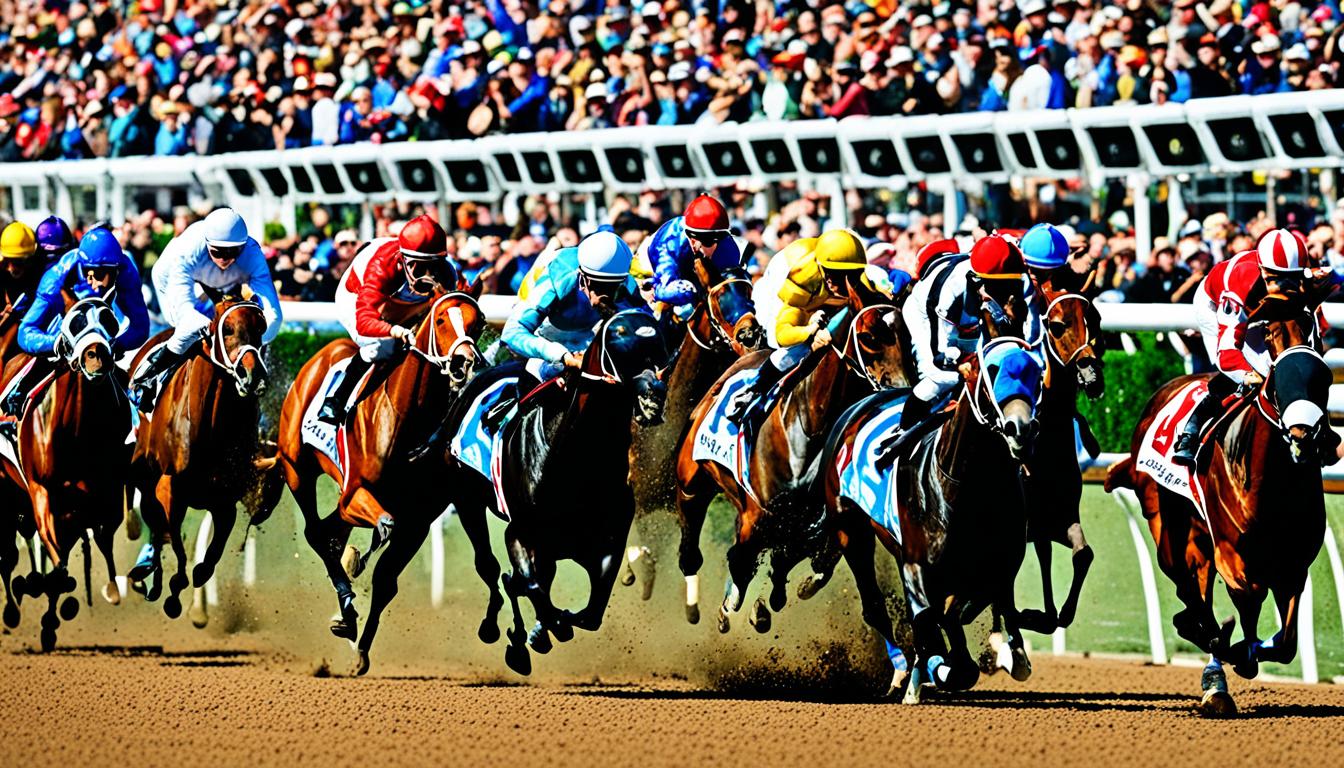
You want to improve your odds in online horse racing JP without relying on luck. Focus on learning how odds work, analyzing horse and jockey form, and choosing the right bet types for each race. Apply a clear strategy that matches race conditions and your risk tolerance to maximize your chances of winning.
This article walks you through practical systems, winning tactics, and tools that professionals use, plus ways to manage your bankroll and stay disciplined. Expect actionable steps on reading odds, spotting value, using advanced data, and betting responsibly so you can make smarter wagers every time.
Understanding Online Horse Racing Betting Systems
Knowing how bet types, odds, and platform integrity interact helps you place smarter wagers and manage risk. Focus on which bets fit your bankroll, how odds reflect probability, and which JP sites protect your funds and data.
Types of Betting Options
You’ll see basic and exotic bets; each suits different goals and risk levels.
- Win / Place / Show: Bet on a horse to finish first, top two, or top three. Use these for lower variance and simpler strategy.
- Exacta / Trifecta / Superfecta: Pick the exact finishing order for 2–4 horses. Payouts are higher but require precise selection and bankroll discipline.
- Quinella / Quinella Place: Choose two horses to finish in the top two in any order. Lower risk than exactas with smaller payouts.
- Daily Double / Pick 3 / Pick 6: Link winners across consecutive races. These can produce large jackpots but demand more research and often require box or wheel strategies.
- Show Pools and Place Pools: Use these when you want partial return certainty; they pay less but improve long-term survival.
Match bet choice to your information advantage. Use win/place for confidence plays and exotics when you find value or want large returns from small stakes.
How Odds Work in Online Horse Racing
Odds express the market’s assessment and determine your payout. Understand both fractional/decimal formats and implied probability.
- Parimutuel systems: Bets pool together; odds fluctuate until betting closes. Your payout = (Net pool after operator takeout) ÷ (Amount bet on winning outcome).
- Fixed-odds: The bookie locks an odds price when you place the wager. You get the agreed payout regardless of late pool movement.
- Converting odds to probability: For decimal odds, implied probability = 1 ÷ decimal odds. Use this to spot overlays where your assessment suggests higher true chance than the market.
- Takeout and vig: Always check the platform’s takeout percentage. Higher takeout reduces long-term expected return and changes which bets are profitable.
Track odds movements pre-race to see where public money flows and to find value when your model disagrees with the market.
Choosing Reputable JP Betting Platforms
Pick platforms that protect your money, provide reliable markets, and follow regulations.
- Licensing and regulation: Verify the operator’s license number and jurisdiction. Licensed platforms must meet financial, anti-money laundering, and fairness standards.
- Security practices: Look for HTTPS, two-factor authentication, and clear withdrawal processing times. Fast, documented payouts indicate operational integrity.
- Market depth and data: Choose sites with full race cards, live odds updates, historical results, and jockey/trainer stats. Better data improves your edge.
- Fees and takeout transparency: Compare takeout rates, minimum bets, and transaction fees. Low visible costs combined with reliable service matters more than promotional bonuses.
- Reputation and support: Read recent user reviews about withdrawals and customer service responsiveness. Responsive multilingual support and dispute procedures reduce operational risk.
Register only after cross-checking these points, and fund accounts with small initial deposits while you confirm payout reliability.
Winning Strategies for Online Horse Racing JP
Focus on measurable data: horse past performance, precise bankroll rules, and betting for value rather than favorites. Apply those methods consistently and record results to refine your approach.
Analyzing Horse Form and Track Records
Look at the last 6 races for each horse, noting finishing position, margins, race class, and any equipment changes. Pay special attention to track surface (turf/dirt/synthetic) and distance — some horses show a clear preference that affects speed and stamina.
Compare jockey and trainer combos: winning percentages for that pairing over the past year reveal reliable partnerships. Check for recent layoffs or first-time starters; both carry predictable risks. Use a simple checklist:
- Last 6 finishes (positions and margins)
- Preferred distance and surface
- Trainer/jockey recent strike rates
- Any gear or medication changes
Prioritize horses whose form lines show improvement or consistent top-three finishes at similar class and conditions.
Bankroll Management Techniques
Set a fixed bankroll for JP-targeted betting separate from other funds. Bet a fixed percentage (commonly 1–3%) of that bankroll per wager to limit downside and survive losing streaks. Adjust the percentage downward after consecutive losses and upward modestly after sustained wins.
Track every bet in a simple spreadsheet: date, race, bet type, stake, odds, result, and running bankroll. Use stop-loss rules — for example, halt betting for the day after losing 5% of your bankroll — to prevent emotional decisions. For large potential payouts (long-shot JP combinations), allocate only a small fraction of your bankroll and size tickets to cover multiple combinations without overexposure.
Value Betting for Maximum Payouts
Calculate implied probability from the odds (Implied % = 1 / decimal odds). Compare that to your assessed probability based on form and conditions. Bet when your assessed probability exceeds the implied probability; that represents value. Avoid bets purely because payouts are large if your assessment doesn’t support the chance.
Use these practical methods:
- Assign a numeric probability to top contenders (e.g., 40%, 25%, 10%).
- Convert to fair odds and identify discrepancies with the market.
- Target bets where market odds offer at least 20% higher payout than your fair odds.
Combine value-betting with conservative staking: increase stakes on clear value and keep speculative tickets for high-payout JP outcomes small but diversified across likely combinations.
Maximizing Winning Opportunities
Focus on precise timing for placing bets and using live-betting tools to adjust positions as race conditions change. Both approaches require discipline: predefined stakes, target odds, and quick but controlled reactions to new information.
Timing Bets for Best Odds
You should set target odds for each selection before the market opens and track how those odds move during morning line releases and pre-race trimming. Bet when your model’s expected value (EV) exceeds the market price by a margin you’ve defined—typically 5–15% for single-win bets depending on your bankroll strategy.
Watch for specific triggers: late jockey scratches, track condition changes (firm→soft), and weight alterations that consistently move odds. Use a small pre-set unit size for early bets and scale up only when multiple triggers align. Record timestamps and outcomes for all bets so you can analyze which time windows yield the best ROI.
Leveraging Live Betting Features
You must prepare a live-betting checklist: monitor sectional times, in-running position reports, and odds drift/contraction across exchanges and bookmakers. Place live bets when you observe a clear divergence between what you expected at race break and the horse’s actual early position or pace scenario.
Use quick-limit or market orders depending on liquidity; prefer exchanges for better lay opportunities. Cap live staking to a strict percentage of your session bankroll (commonly 1–3%) to prevent chase losses. Keep a simple live log: entry odds, exit odds, reason for entry, and result. This data helps refine your live-race read and identifies which race types (sprints, routes, turf) suit your in-play style.
Expert Tips for Consistent Success
You will learn how to spot value bets among overlooked runners and which routine mistakes to stop making to protect your bankroll and edge. Focus on measurable signals and repeatable processes that produce steady results.
Identifying Underrated Horses
Look for horses with improving speed figures across their last three starts; a rising trend often signals genuine form progression. Compare their recent times on similar track surfaces and distances to the race you target, not only raw finishing positions.
Check trainer and jockey combinations that show a history of positive ROIs in the same class or course. A trainer switching to a shorter distance or fitter work pattern can reveal hidden potential.
Use odds movement as a market signal: if a horse drifts early but receives late support before post time, that can indicate insider confidence. Conversely, a stable-maintained price with improving metrics is classic value.
Create a simple checklist: recent speed trend, class drop or suitable class, trainer/jockey synergy, workout quality, and surface/distance match. Rate each item 0–2 and back horses scoring above your threshold.
Avoiding Common Betting Mistakes
Don’t chase losses with larger, emotional bets. Set a fixed staking plan (percentage of bankroll per wager) and stick to it; that prevents catastrophic variance from derailing your account.
Avoid overbetting favorites in fields where pace or surface negates their strengths. Analyze projected pace and whether the favorite’s running style fits race shape; favorites win less in heavily contested early-speed races.
Resist betting on reputation alone. Verify recent performance metrics and workout data before wagering. Also, limit exotic bets to races where you have a researched edge; otherwise, favor simple win/place wagers to preserve ROI.
Keep clear records of every bet with rationale, stake, and outcome. Review monthly to identify leaks—types of bets, tracks, or trainers that underperform—then adjust your strategy accordingly.
Advanced Tools and Resources
Leverage quantitative tools and real-time market feeds to make decisions based on measurable signals, not intuition. Focus on datasets, model outputs, and liquidity movements that directly affect odds and race outcomes.
Using Data Analytics for Informed Bets
You should start with structured race datasets: past performance, sectional times, track variant, jockey strike rates, and recent speed figures. Import these into a spreadsheet or analytics platform and normalize variables (e.g., convert times to track-adjusted speed ratings) so you compare like with like.
Build simple models first: weighted linear scores or logistic regressions that predict finish probability. Validate with backtests over at least one season and track metrics like ROI and hit rate. Use ensemble approaches only after you understand each model’s bias.
Visualize results with heat maps or small tables to spot value opportunities. Save model outputs as probability vs. market odds so you can quantify expected value (EV) before staking.
Monitoring Market Movements
Monitor price ladders and exchange liquidity to read how professional money flows during the betting window. Watch for late shifts in the tote, exchange swings, and large unmatched bets that indicate information arriving after markets opened.
Set simple alerts for odds moves beyond a threshold (for example, a jockey or stable change causing >20% implied probability shift). Track where prices shorten—those are often backed by insiders or informed punters.
Combine market signals with your model outputs: if your model shows EV and the market shortens significantly, reassess stake size rather than blindly following the move. Keep a log of market events and outcomes to refine how you interpret liquidity signals over time.
Responsible Betting Practices
You should set a clear bankroll before you start betting and stick to it. Treat your bankroll as a fixed budget for entertainment, not a way to chase losses.
Use stake-sizing rules to control risk. For example, limit single bets to 1–3% of your bankroll; this helps you survive variance and stay in the game longer.
Keep records of your bets, returns, and rationale. Tracking outcomes lets you evaluate what works, identify mistakes, and refine your strategy over time.
Recognize signs of problem gambling and act early. If betting causes stress, missed obligations, or repeated attempts to recover losses, seek help and pause staking immediately.
Use built-in site tools to keep control. Most platforms offer deposit limits, session timers, and self-exclusion — enable the options that match your needs.
Consider these practical habits:
- Plan: Define goals and time limits before you start.
- Diversify: Avoid putting large portions of your bankroll on a single race.
- Pause: Step away after a losing streak or an emotional reaction.
If you decide to seek support, look for professional resources and local hotlines. Asking for help is a responsible decision that protects both your finances and wellbeing.